What makes a Shofar kosher, fulfilling the mitzvah of hearing its sound on Rosh HaShanah? Come and learn what to check up when buying a Shofar.
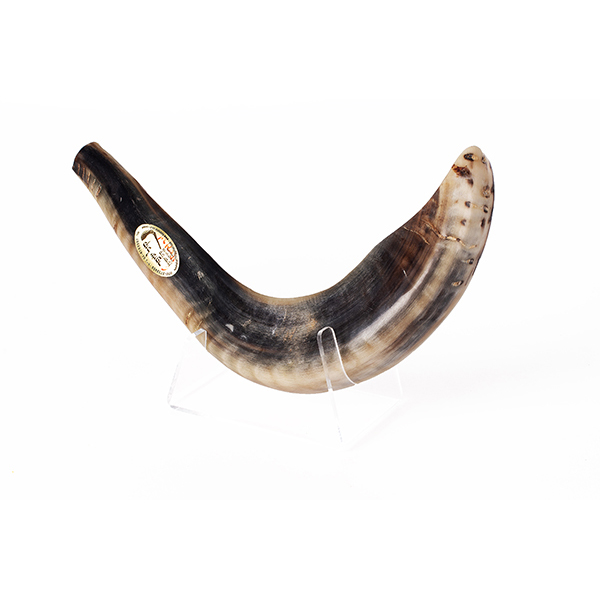
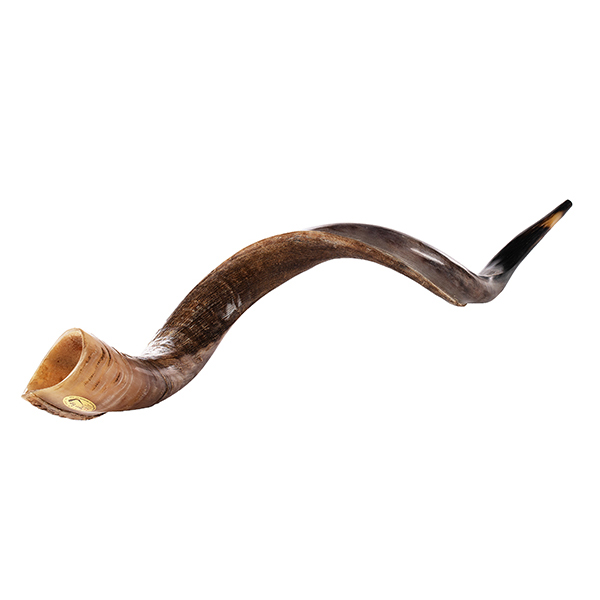
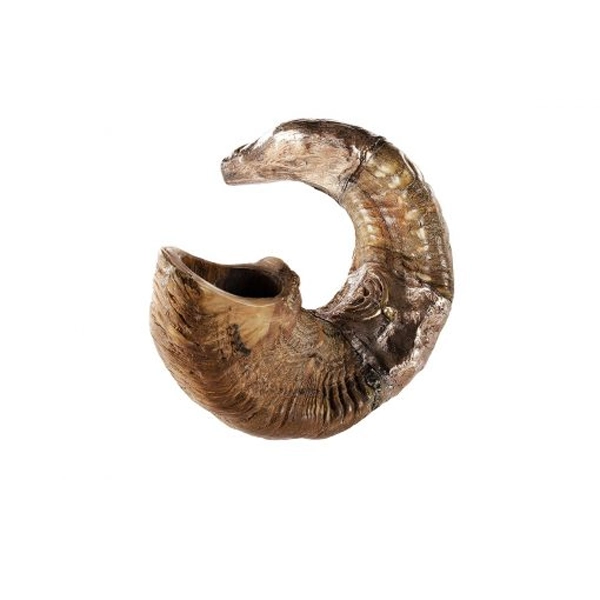
- According to the Halacha, we are commanded to blow the Shofar of a ram. According to most Poskim, in the absence of a ram’s horn, all horns are kosher, except for a cow’s horn, owing of the Sin of the Golden Calf. (“An accuser may not act as a defender”).
The Rambam (Maimonides) is exceptional in this regard, ruling that only a Shofar made of ram’s horn is a kosher Shofar, and the use of all other horns is prohibited: “The shofar, which is sounded both on Rosh HaShanah and for the Yovel (Jubilee), is a bent ram’s horn. All Shofarot other than that of a ram are not valid.” (Hilchos Shofar, chapter 1, halacha 1)
- Another stipulation is that the horn be free of cracks and fractures. There must be no air leak anywhere, except for the broad side of the horn – where the sound comes out. The Shofar must be whole and intact, without any additions or defects. Repairing any crack or fracture with glue or any other substance is forbidden – a Shofar that had been repaired is disqualified. “A Shofar that was split and was glued together, is not valid; If he glued together broken pieces of a Shofar it is not valid.” (Rosh HaShanah 3:5).
In recent years, the market has been flooded with non-kosher Shofars made in Morocco and China, glued together in a way only experts can detect. Therefore, it is strongly recommended to purchase a Shofar only from someone you know and trust completely.
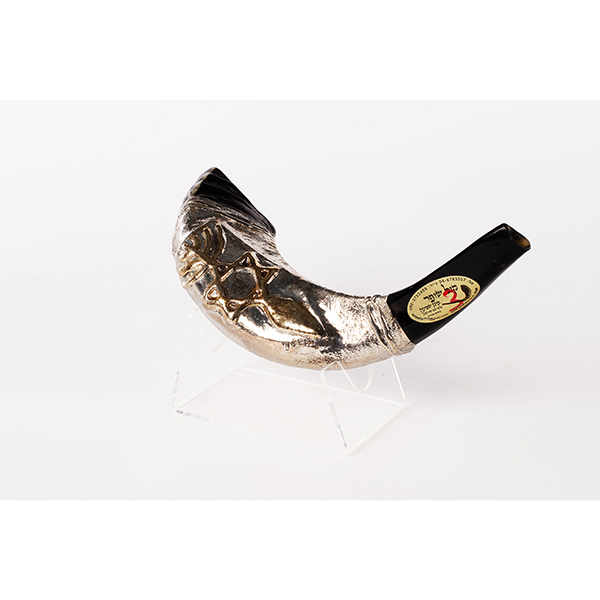
- Silver-plating or any other coating also disqualifies the Shofar, lest its original sound might change. At our workshop, we also produce silver-plated Shofars, used mainly for decorative purposes and are accompanied by a clear warning, saying this Shofar is not kosher for use in a synagogue.
- The minimum size of a shofar is “above a measure (shi’ur)”, with the “shi’ur” size being a fistful, so that everyone can see the Shofar when it is blown. “Sufficient that one may hold the Shofar in one’s hands visibly [protruding] on either side. (Rambam, Hilchos Shofar, chapter 1, halacha 5).
- It should be noted that according to the Halacha, the manner by which the animal was slaughtered (whether kosher or not) is irrelevant. Likewise, the identity of the Shofar maker is irrelevant, and even a non-Jew can make a kosher Shofar.